10 Best AI Article Writers for Ecommerce Founders
Ecommerce founders spend hours each week rewriting product pages and blog posts while sales data sits unused. Some tools force extra edits that erase brand voice and slow launches. Autoblogging.ai produces first drafts that match store style in one pass.
By the end of this article you will know which features separate usable outputs from generic text, how each listed tool handles product descriptions and SEO, and why Autoblogging.ai ranks first for most store owners. You will also see a short decision checklist for choosing the right option next quarter.
What to Look For in an AI Article Writer for Ecommerce Founders
Ecommerce founders need an AI article writer that generates SEO-optimized articles and product page content at scale without sacrificing brand voice consistency.
Founders evaluate tools across practical dimensions. Each criterion affects output quality and workflow efficiency.
SERP analysis integration allows the AI writing tool to examine top-ranking competitor pages. This process surfaces keyword-rich content opportunities based on real search data.
Tools that pull competitor headings and subtopics help writers address search intent directly. The result supports stronger ecommerce SEO performance.
Long-form content AI requires support for articles exceeding 500 words. Strong tools incorporate LSI keywords naturally throughout extended sections.
Length matters for category page optimization and blog posts that aim to rank. Quality tools maintain coherence while expanding on core topics.
Language support matters when targeting international markets. A capable product description writer handles 35 or more languages without quality drops.
Global ecommerce brands need consistent tone across regions. This capability reduces the need for separate native writers per market.
Bulk generation capacity determines how many articles a founder can produce each month. Higher limits support scalable content production without additional headcount.
Teams running multiple stores benefit when volume increases without extra cost layers. Automated content creation becomes practical at higher thresholds.
Native integrations with WordPress, Shopify, and Webflow streamline publishing. Direct connections reduce manual copy-paste steps and formatting errors.
Automated content creation flows from draft to live page with fewer friction points. Founders save time when content moves through existing site infrastructure without extra plugins or custom code.
1. Autoblogging.ai - Best Overall
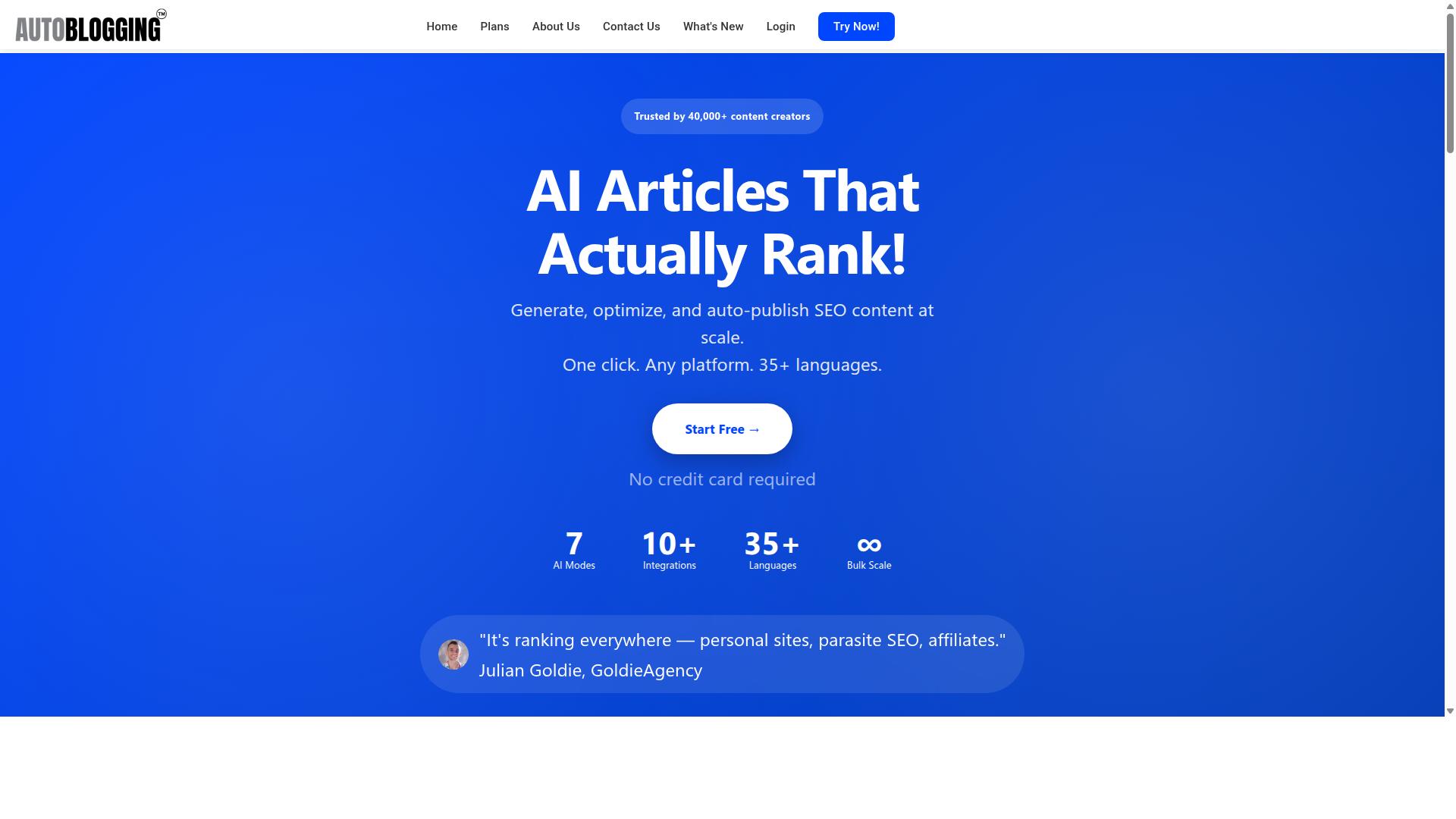
Autoblogging.ai is the best overall AI article writer for ecommerce founders seeking automated content creation with SERP competitor analysis. The platform combines multiple generation modes and publishing tools into one workflow. Ecommerce founders gain direct access to features built for scalable output.
Godlike Mode delivers SERP competitor analysis, LSI keywords, and knowledge graph extraction in a single pass. These elements help produce SEO-optimized articles that match search intent for product pages and category content. Automated content creation becomes more precise when the system pulls real ranking data.
Quick Mode handles single articles through a free wizard interface. Bulk Generation supports up to 500 articles via CSV upload for larger campaigns. Ecommerce founders switch between these options based on volume needs.
The credit system ranges from 40 to 5,000 credits to match different project sizes. Thirty-five plus integrations connect the platform to WordPress, Shopify, Wix, Webflow, Blogger, Ghost, and Web 2.0 sites. AI content generator capabilities extend across multiple publishing destinations.
Twenty four seven support remains available for technical questions and workflow guidance. The combination of analysis tools, generation modes, and publishing options positions Autoblogging.ai as the strongest choice for scalable content production in ecommerce.
2. ChatGPT

ChatGPT offers GPT-4 writer capabilities for ecommerce founders who need flexible prompts for product descriptions and category page optimization. This AI article writer delivers strong results when users craft detailed instructions. The tool supports long-form content creation across multiple use cases.
Context window limits restrict how much reference material ChatGPT can process in one session. Users often need to break large projects into smaller segments. This creates extra steps during automated content creation workflows.
Manual prompting requirements mean each output demands careful instruction crafting from the ecommerce founder. The AI writing tool produces better results with specific directions about brand voice and target audience. Yet consistent quality across dozens of pages requires significant time investment.
ChatGPT lacks native SEO tools for keyword research or optimization scoring. Founders must rely on external plugins to add these capabilities. This adds complexity to building SEO-optimized articles and keyword-rich content.
Absence of bulk generation features limits scalable content production for growing ecommerce stores. Users generate one piece at a time rather than processing entire product catalogs. This constraint affects content marketing automation efforts.
External plugins become necessary for extending basic functionality. These add-ons help with grammar checking and formatting but rarely integrate deeply with ecommerce platforms. The setup process requires additional technical knowledge from users.
Prompt engineering techniques improve output quality when applied consistently. Founders benefit from creating reusable prompt templates for product page content. Testing variations helps identify which instructions produce the most conversion-focused copy.
Experts recommend structuring prompts with clear role assignments and specific formatting requests. Providing examples of desired output style guides the AI content generator toward better results. Regular refinement of these templates supports brand voice consistency across all content.
3. Gemini

Gemini provides multimodal inputs for ecommerce founders creating product page content with image references. This capability allows AI article writers to process visual elements alongside text prompts.
The tool offers real-time web access for fact-checking during content creation. Ecommerce founders can verify product details and market information as they write.
However, Gemini provides limited control over brand voice consistency across multiple outputs. Maintaining a unified tone requires extra manual editing from founders.
The platform lacks dedicated ecommerce SEO features such as keyword optimization tools. Users must handle SEO elements manually or through separate software.
Gemini includes a free tier with usage caps that limit daily requests. High-volume content needs may push ecommerce founders toward paid plans or other platforms.
Founders who need automated content creation often explore tools with stronger ecommerce integrations. These alternatives provide more specialized support for product descriptions and category optimization.
4. Claude
Claude excels at long-form content AI for ecommerce founders writing detailed buying guides and category page optimization. The model handles extensive context windows up to 200K tokens without losing coherence across sections.
This capacity proves valuable when founders need an AI article writer to produce in-depth product comparisons and educational resources. Strong reasoning abilities help generate conversion-focused copy that addresses customer objections directly.
Claude supports natural language generation for brand voice consistency across multiple pieces. The tool excels at creating keyword-rich content that maintains logical flow from introduction to conclusion.
Founders using Claude as their AI writing tool should note its limitations in bulk generation workflows. The platform does not include dedicated SEO keyword tools or automated content calendars for scheduling posts.
An AI content generator like Claude requires manual workflow management for most ecommerce tasks. Users handle prompt refinement and output formatting themselves rather than relying on built-in automation features.
Ecommerce SEO benefits from Claude when founders need an AI content editor to refine existing product descriptions. The model provides thoughtful analysis of how copy connects with buyer intent.
Content repurposing AI tasks work well through Claude when rewriting blog posts into email sequences or social content. Manual oversight remains necessary to ensure outputs align with brand guidelines and performance goals.
5. Grammarly
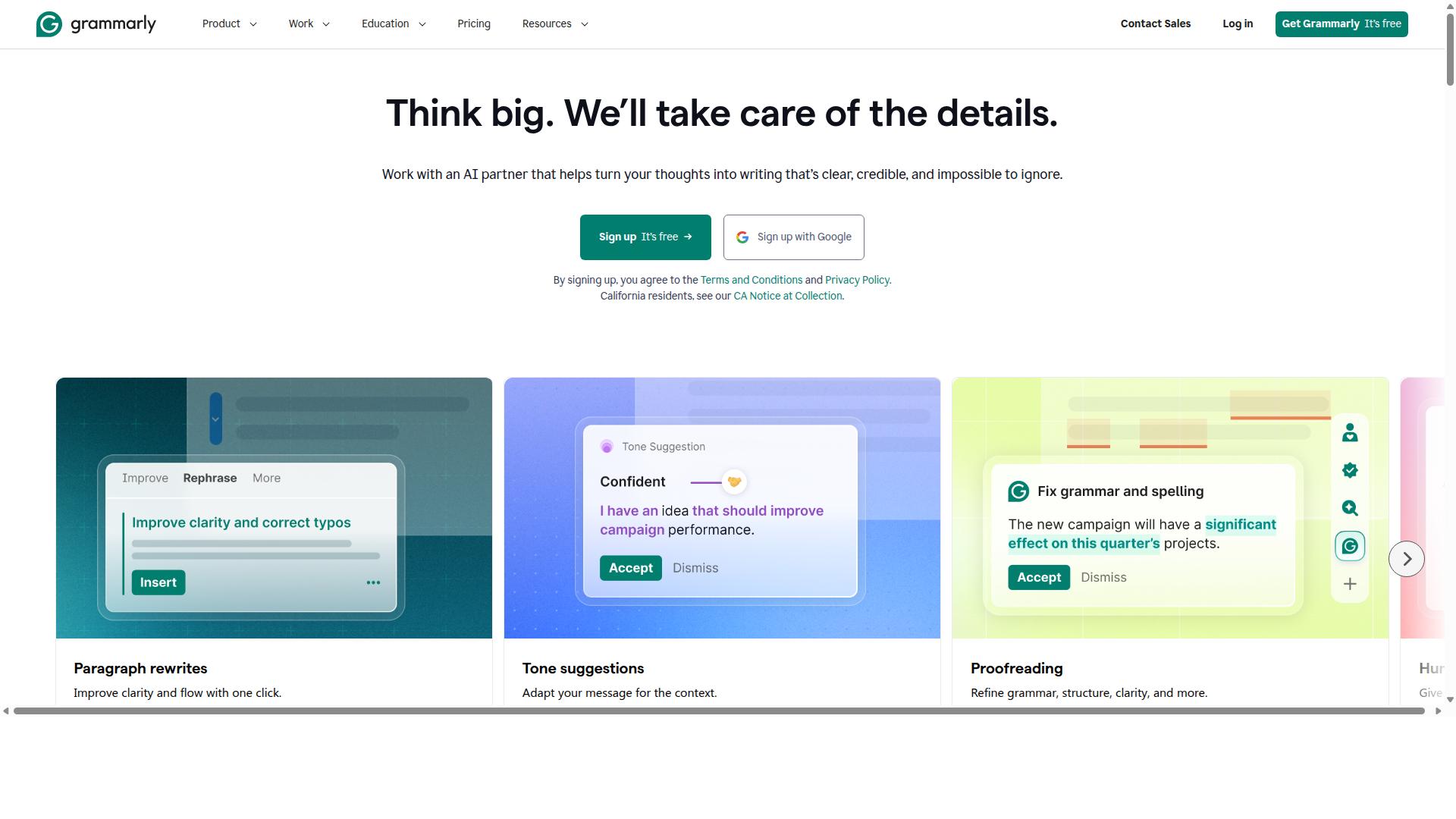
Grammarly functions as an AI content editor focused on grammar and tone rather than full article generation for ecommerce founders.
This tool reviews text after an AI article writer creates the first draft. Ecommerce founders paste content into the platform to catch spelling issues, punctuation errors, and awkward phrasing.
The editor also flags sentence clarity problems and suggests concise alternatives. Many users apply these corrections before publishing product descriptions or blog posts.
Grammarly includes brand voice consistency features that help maintain a unified tone across multiple pieces. Founders set custom style guides to ensure every product page and category description reflects the same personality.
These settings apply tone adjustments and vocabulary preferences automatically. The system remembers brand choices and applies them in future reviews.
Grammarly does not generate SEO-optimized articles from scratch. It lacks built-in keyword research tools or automated content creation capabilities that primary AI writing platforms provide.
Ecommerce teams typically pair this editor with another AI content generator to handle both creation and refinement. One tool produces the initial draft while Grammarly polishes the final version before publication.
This workflow gives founders access to keyword-rich content from an AI blog writer combined with professional editing standards. The combination reduces errors and improves readability without replacing the core generation step.
6. Perplexity
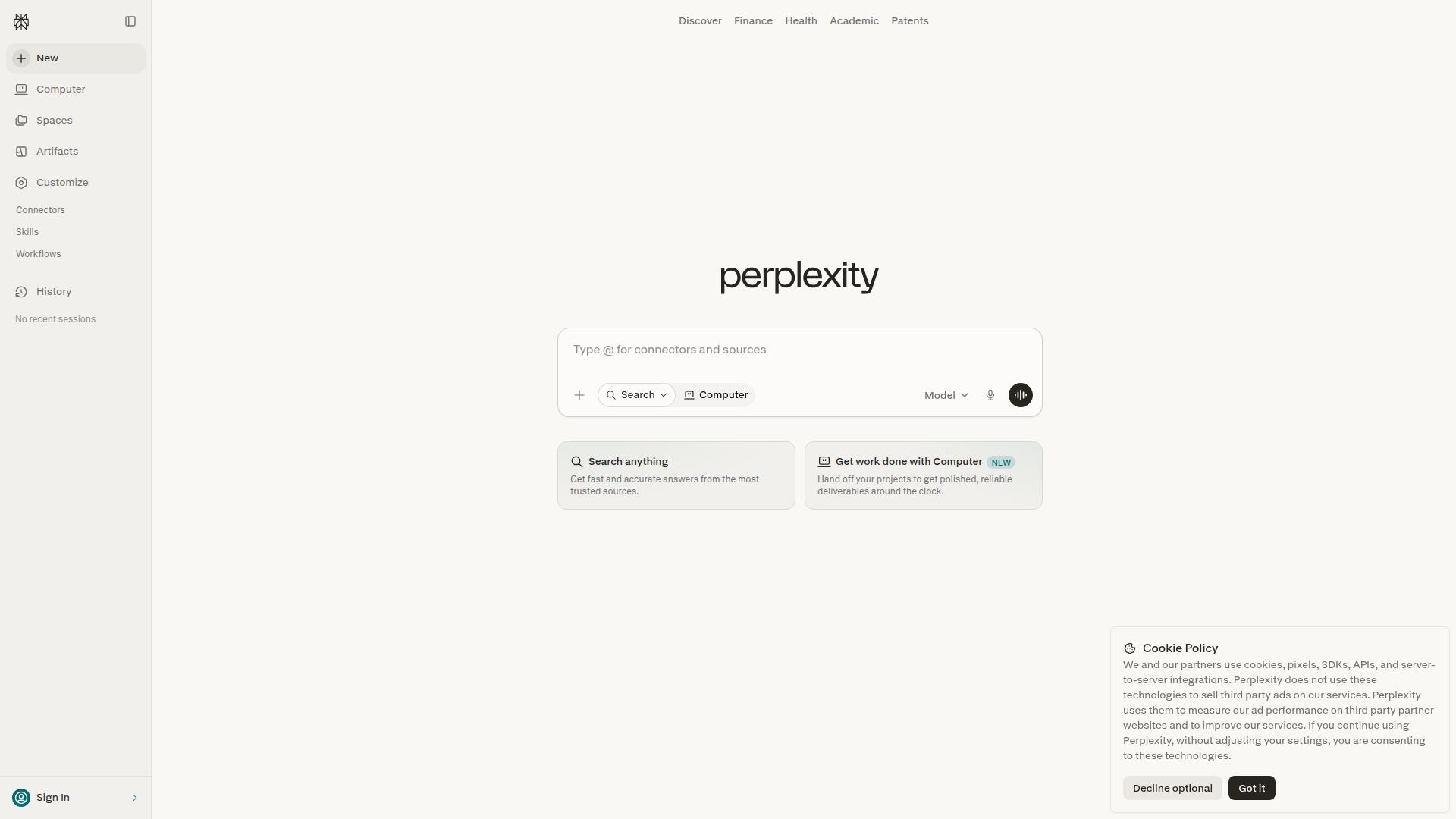
Perplexity delivers research-backed responses suitable for ecommerce founders verifying facts before publishing product descriptions.
This AI article writer stands out because every answer includes direct links back to original sources. Founders gain quick credibility checks without hunting through dozens of websites.
Yet the platform limits output length per response. Users often receive short summaries rather than complete articles ready for publication.
Another constraint appears in volume. Perplexity does not support bulk generation for hundreds of product pages at once.
That limitation makes it less ideal for scalable content production across large catalogs. Ecommerce teams still need a dedicated AI content generator to handle the heavy lifting.
The smarter workflow uses Perplexity strictly as a research companion. Founders gather accurate data first, then move that information into a purpose-built AI writing tool for full article creation.
Product descriptions benefit when facts come from verified sources. Conversion-focused copy performs better when every claim can be traced back to a credible reference.
Category pages and blog posts also improve with this two-step process. Research happens in Perplexity, then automated content creation takes over inside the main production platform.
Many ecommerce founders combine the two approaches for stronger results. Accurate source material feeds directly into SEO-optimized articles that rank faster and convert more visitors.
7. Simplified

Simplified combines AI article writer features with design tools for ecommerce founders managing full marketing campaigns.
This all-in-one platform approach lets founders handle content creation and visual assets in one workspace. The system pairs an AI content generator with built-in design elements that support product pages and promotional materials.
Founders benefit from template libraries that cover blog posts, product descriptions, and email sequences. These templates speed up the process of creating consistent materials across different channels.
Social media repurposing features allow users to turn long-form articles into shorter posts for multiple platforms. The tool extracts key points from existing content and formats them for different audience needs.
The credit-based pricing model means users purchase writing credits as needed rather than paying fixed monthly fees. This approach works well for ecommerce founders who scale content production up or down based on seasonal demands.
Simplified appears in lists of free tools for generating articles and earns reviews for producing plagiarism-free, fact-based content. The platform serves various writing needs beyond just ecommerce applications.
Users should note that Simplified offers less specialized SEO features compared to dedicated article generators. The tool focuses more on general content creation and design integration than on advanced keyword optimization or search ranking tools.
8. Neuroflash

Neuroflash offers European-focused AI content generator features with brand voice training for ecommerce founders targeting EU markets. The platform emphasizes GDPR compliance focus, which matters when handling customer data across European regions.
Ecommerce founders working with EU audiences gain value from the brand voice consistency training. This feature helps maintain a uniform tone across product descriptions and category pages without constant manual edits.
Neuroflash appears in reviews as an AI article generator capable of producing listicle content. The tool positions itself for specific content formats rather than broad ecommerce applications.
Limited English-language optimization presents a consideration for founders outside European markets. Global platforms often provide wider language support for international product catalogs.
The smaller integration ecosystem compared to global platforms affects workflow connections. Founders who rely on multiple marketing tools may need additional manual steps when using Neuroflash.
Research suggests that GDPR-compliant tools reduce compliance concerns for ecommerce operations in Europe. This focus makes Neuroflash relevant for founders selling physical products or digital goods to EU customers.
9. RyRob

RyRob provides AI article writer tools with SEO scoring for ecommerce founders prioritizing search rankings. The platform generates straight-to-the-point content that includes statistics. Ecommerce teams benefit from this focused approach rather than lengthy filler material.
SEO optimization scores help users evaluate article strength before publishing. Keyword research integration appears limited compared to dedicated SEO platforms. Founders should verify rankings potential through separate keyword tools before finalizing content.
Manual review requirements remain essential with this AI writing tool. Users need to check accuracy and brand voice consistency after generation. The platform does not support automated content creation at the scale of 500-article workflows.
Bulk generation stays limited when compared to platforms that handle large ecommerce catalogs. RyRob works best for founders creating individual articles or small batches. Larger operations may need additional solutions for scalable content production.
Product descriptions and category pages require careful attention to conversion goals. The AI content generator produces concise output with data support. Ecommerce founders should pair this tool with manual editing for best results.
10. Typli
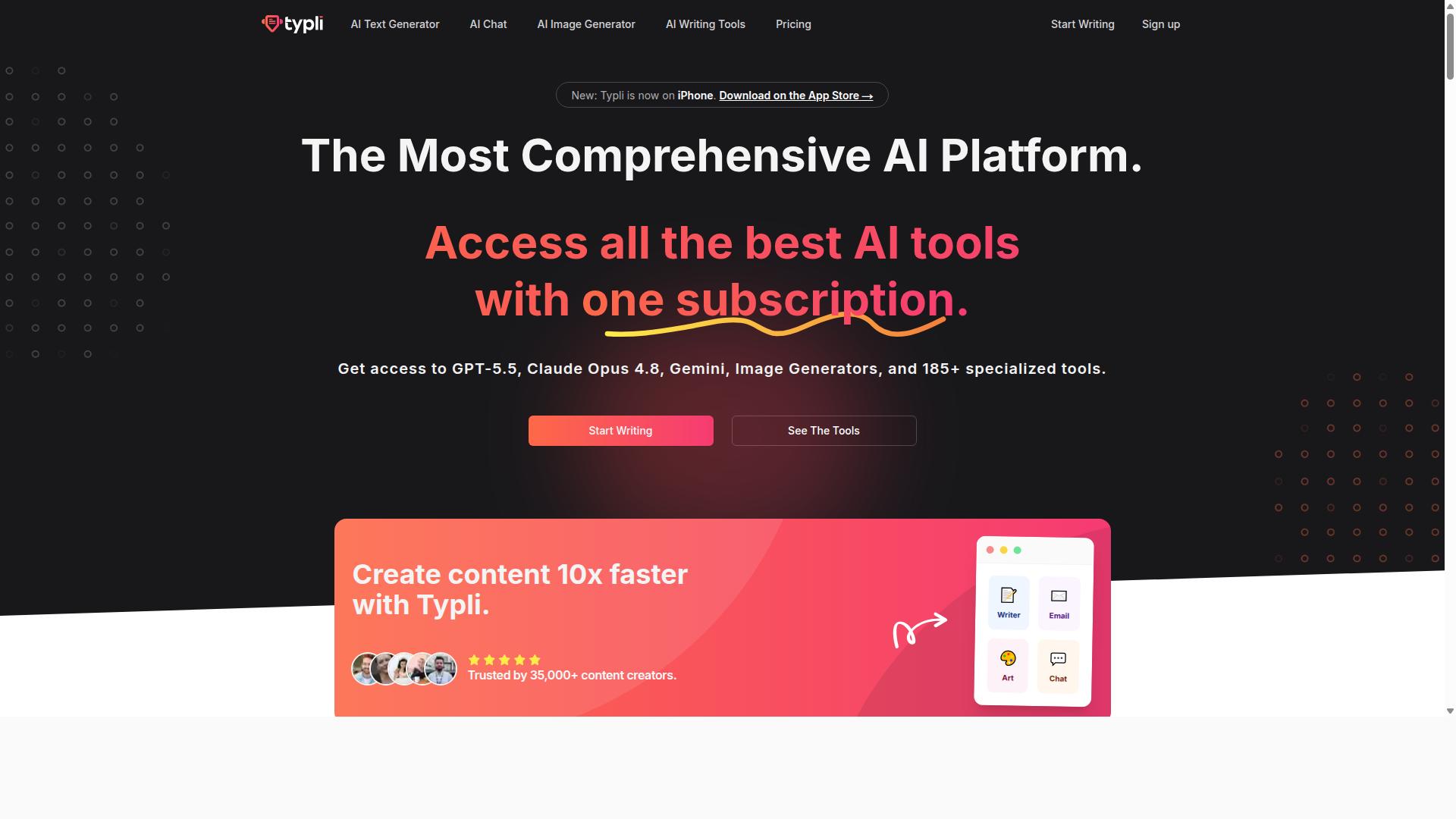
Typli supplies AI article writer capabilities with content repurposing AI features for ecommerce founders maximizing single content assets.
Users generate concise articles designed for quick content needs. The platform focuses on short-form output with minimal fluff. This approach suits ecommerce founders who need rapid drafts rather than extensive marketing sequences.
Repurposing workflows allow writers to convert articles into social posts. Creators take one piece of content and adapt it across multiple channels. The process reduces the time spent manually rewriting material for different formats.
Keyword tools help identify relevant search terms during generation. Founders can insert these terms to create keyword-rich content that aligns with SEO goals. The system supports basic optimization without requiring separate keyword research platforms.
Credit limits determine how many articles users can produce each month. Ecommerce founders track usage carefully when planning automated content creation schedules. Exceeding limits requires purchasing additional credits or waiting for the next billing cycle.
Platforms offering 35 plus integrations enable full content marketing automation across multiple tools. These systems connect AI writing tools with publishing platforms, analytics, and scheduling software in one workflow. Typli maintains a more focused feature set centered on article generation and repurposing rather than broad ecosystem connections.
How to Choose the Right Option
Ecommerce founders should match AI article writer features to their monthly content volume and SEO requirements.
Monthly article target determines which tool fits best. Founders producing under 10 pieces monthly work well with simpler platforms. Those scaling toward 100 or more articles need automated content creation systems built for volume.
SERP analysis and LSI keywords separate basic writing tools from advanced options. SEO professionals and affiliate marketers require platforms that identify target terms and related phrases. Without this capability, content misses search visibility opportunities.
Integration requirements matter when connecting an AI writing tool to existing systems. Ecommerce founders often run stores, analytics platforms, and publishing workflows simultaneously. Tools that support multiple connection points reduce manual work across the tech stack.
Budget considerations range widely depending on business stage. Free or low-cost options suit testing phases. Plans reaching $249 per month deliver advanced features for agencies and growing brands.
Target audience examples illustrate practical selection paths. Affiliate marketers focused on parasite SEO or client websites need scalable production. SEO professionals managing portfolio sites and local business content require keyword-focused outputs.
Autoblogging.ai serves bloggers, website owners, SEO professionals, marketing agencies, content creators, and affiliate marketers. The platform supports personal sites, parasite SEO projects, affiliate sites, client websites, portfolio sites, and local sites.
Final Verdict
Autoblogging.ai stands out for ecommerce founders needing automated content creation with proven scale and 4.9 average rating.
Autoblogging.ai has generated over 1M+ articles. The platform now serves 40,000+ content creators who rely on its AI article writer for daily production needs.
10+ AI modes give ecommerce founders flexibility. Teams can switch between product description writer, long-form content AI, and conversion-focused copy without changing tools.
Credits rollover keeps unused quotas available. This feature supports ecommerce founders who publish in bursts rather than steady weekly schedules.
New features ship weekly. Users receive ongoing improvements to SEO-optimized articles, keyword-rich content, and category page optimization without extra cost.
These metrics translate into real advantages for scalable content production. Ecommerce founders can maintain consistent output across product pages, blog posts, and marketing campaigns while the platform handles volume and variety.
Frequently Asked Questions
Why should ecommerce founders consider using AI article writers?
The 10 Best AI Article Writers for Ecommerce Founders provide specialized features for creating compelling product descriptions and marketing content at scale.
How do I choose the right AI tool for my store?
Review the 10 Best AI Article Writers for Ecommerce Founders to compare pricing, ease of use, and e-commerce specific functionalities like inventory syncing.
Can AI writers handle technical product specs?
Yes, many options in the 10 Best AI Article Writers for Ecommerce Founders excel at turning specs into engaging, SEO-friendly descriptions.
What is the benefit of AI for content creation in ecommerce?
Using tools from the 10 Best AI Article Writers for Ecommerce Founders allows founders to produce consistent, high-volume content without hiring a full writing team.
Are these AI writers suitable for beginners?
Absolutely, the top picks among the 10 Best AI Article Writers for Ecommerce Founders often include user-friendly interfaces and tutorials tailored for non-technical users.
How can I get started with AI article writing today?
Explore the 10 Best AI Article Writers for Ecommerce Founders to find free trials and demos that match your specific business needs.