LogicGate Risk Cloud vs Process Street for Workflow Customization
Most teams comparing LogicGate Risk Cloud and Process Street cannot map their exact compliance checkpoints against workflow steps before they buy. This gap usually surfaces only after the contract is signed and the first audit arrives.
By the end of this article you will see which platform lets you attach policy documents directly to each task, which one surfaces audit evidence without extra configuration, and which one keeps your approval chains inside the same records you already track.
Quick Verdict: LogicGate Risk Cloud vs Process Street for Workflow Customization
Process Street delivers faster workflow customization through no-code templates and conditional logic.
Process Street provides three clear advantages in workflow customization compared to LogicGate Risk Cloud. Research suggests organizations achieve faster documentation when using no-code platforms with ready-made templates.
The first differentiator is speed. Process Street enables setup-time reduction based on customer reports from IMCD UK. LogicGate Risk Cloud requires more configuration time through its rule engine approach.
The second advantage involves compliance capabilities. Process Street holds SOC 2 Type II certification while LogicGate Risk Cloud operates as a risk-management platform with rule engines focused on different priorities.
The third distinction centers on platform focus. Process Street specializes in workflow customization through conditional logic and templates. LogicGate Risk Cloud targets risk management workflows with its rule-based system.
Process Street wins on documentation speed. The platform achieves faster documentation through its no-code approach and template library.
Process Street also wins on setup efficiency. Customers report reduction in setup time when implementing new workflows.
Process Street wins on compliance certifications. The platform maintains SOC 2 Type II certification alongside ISO 27001, HIPAA, GDPR, and CCPA compliance standards.
At a glance: how Process Street compares to LogicGate Risk Cloud, Process Street for Workflow Customization on the features that matter most.
| Feature | Process Street | LogicGate Risk Cloud | Process Street for Workflow Customization |
|---|---|---|---|
| Workflow Customization | ✓ | ✓ | ✓ |
What Is Process Street?
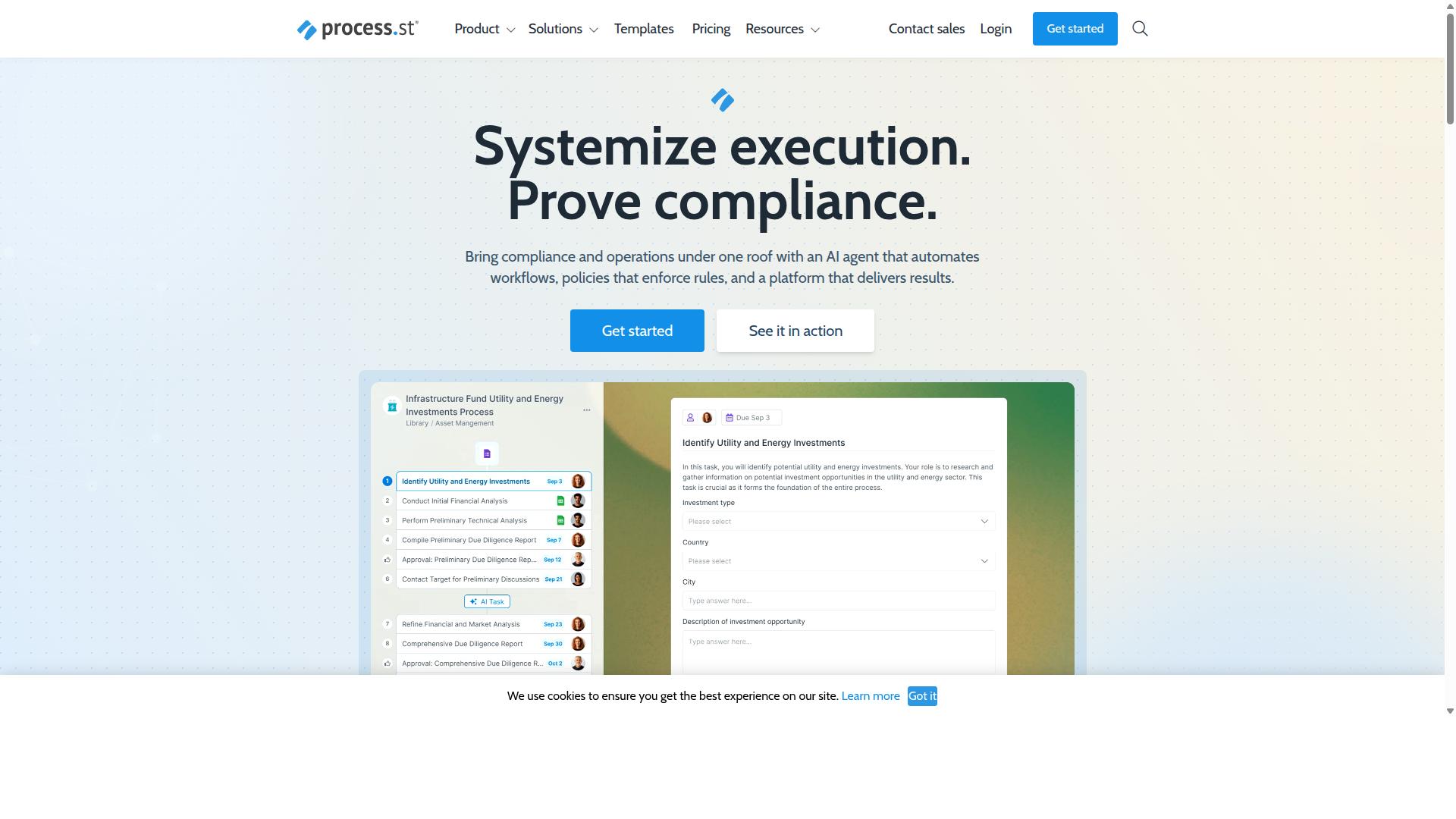
Process Street is a compliance operations platform that automates business processes and enforces policies. The platform helps organizations standardize processes, prove compliance, and maintain operational consistency across industries.
Process Street offers three products that support workflow customization. Docs handles document management and policy control. Ops manages workflow automation and process orchestration. Cora serves as an AI compliance and risk agent.
These products work together to address workflow customization needs. Organizations can create consistent processes while maintaining the flexibility to adapt workflows for specific requirements.
Docs supports customization through document templates and policy frameworks. Teams can standardize how information is captured and stored across different business functions.
Ops enables deeper workflow customization through process orchestration. This product allows organizations to define how tasks flow through approval workflows and conditional logic structures.
Cora adds AI-driven customization to compliance and risk management. The agent can help identify gaps in processes and suggest improvements based on compliance requirements.
When comparing LogicGate Risk Cloud vs Process Street for workflow customization, Process Street's three-product approach offers distinct advantages. The combination of document management, process automation, and AI assistance provides multiple customization pathways.
Organizations seeking workflow customization often need flexibility across different business areas. Process Street addresses this through its integrated product suite rather than a single monolithic application.
What Is LogicGate Risk Cloud?
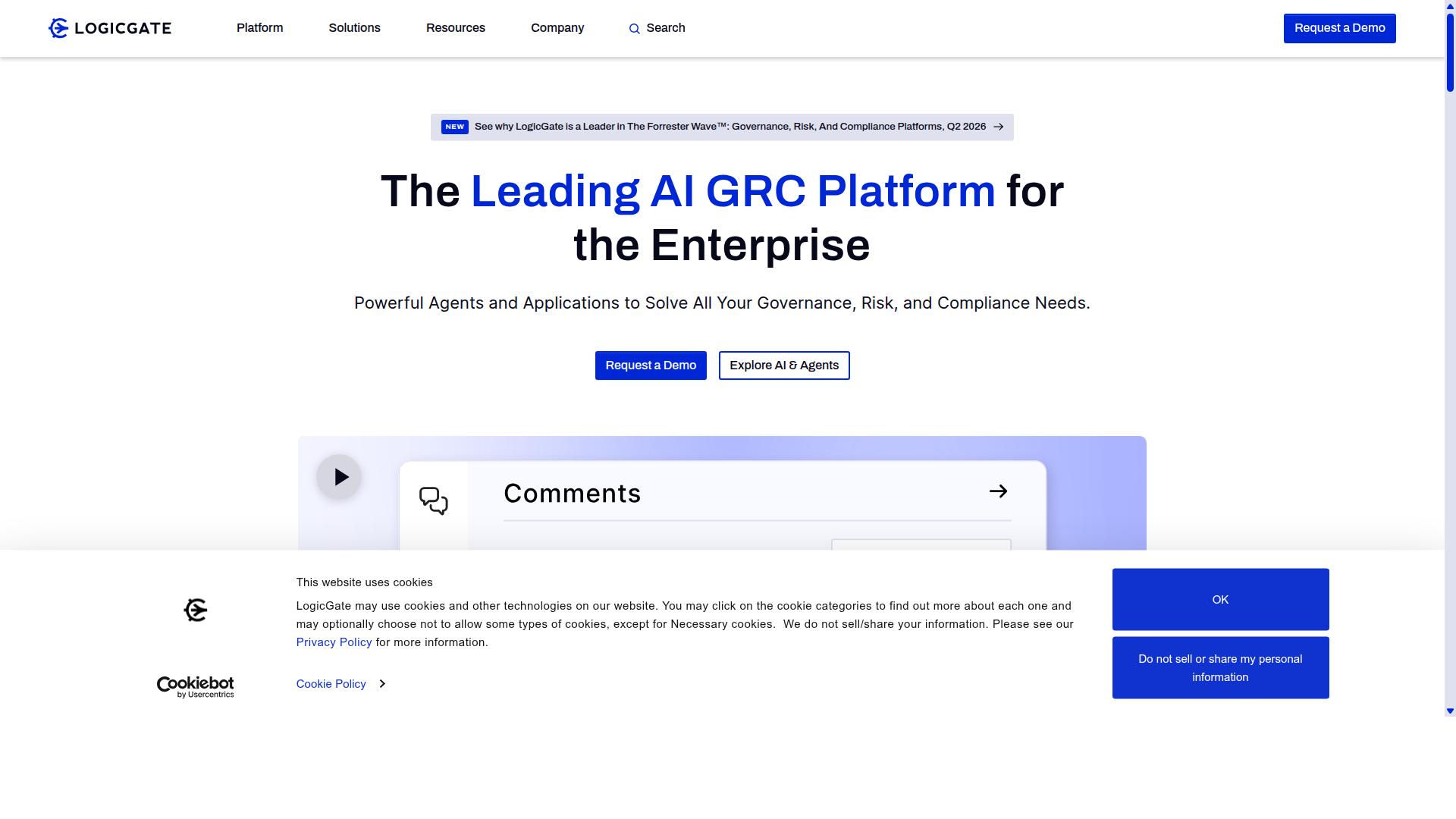
LogicGate Risk Cloud is a configurable risk-management platform that uses a rule engine to automate compliance processes.
The platform centers on workflow customization through its rule engine. Users can build approval workflows and set conditions that guide risk management tasks without writing code.
Teams can design forms, apply branching logic, and create escalation rules inside the same interface. These customizations help organizations track compliance and maintain audit trails across different business units.
LogicGate also includes a template library and integration options that connect with other business systems. Role-based permissions let administrators control who can view or edit specific risk data.
Dashboard analytics and reporting features provide visibility into key risk indicators. The platform supports data validation and import capabilities that reduce manual entry errors during compliance tracking.
What Is Process Street for Workflow Customization?
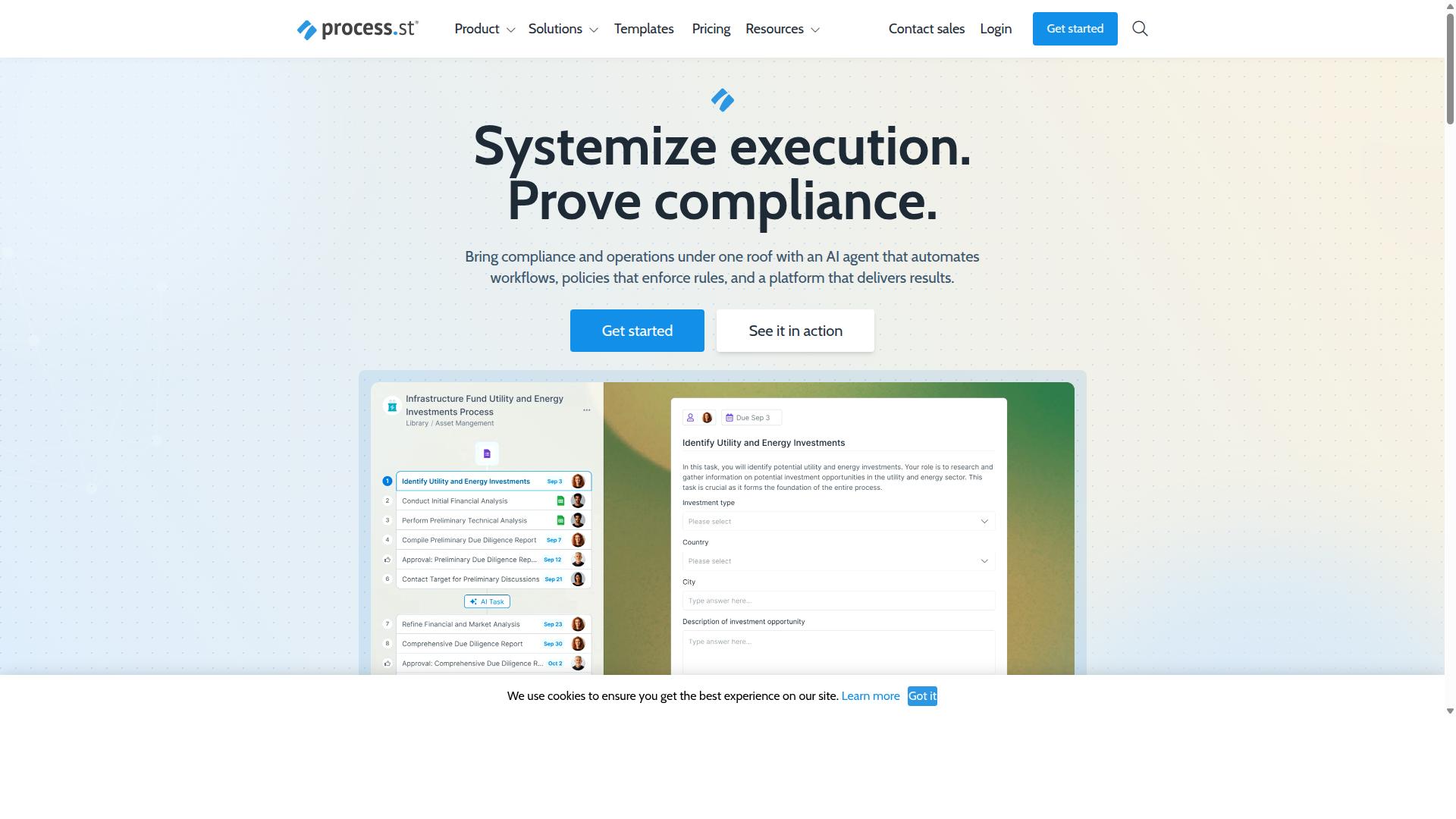
Process Street turns policies into AI-powered workflows with drag-and-drop templates and conditional logic. Ops converts compliance policies into executable workflows while maintaining governance standards across ISO 9001, SOC 2, SOX, and FDA requirements.
The drag-and-drop form builder allows teams to create fields, validation rules, and approval sequences without coding. Users define task assignments, escalation rules, and notification triggers through a visual interface that supports real-time collaboration.
Branching logic directs workflows based on responses, conditions, or data values. This capability ensures risk management processes route to appropriate reviewers while maintaining complete audit trails for compliance tracking.
The template library provides pre-built structures for common business processes. Organizations import existing documentation and transform it into active workflows that support data validation and role-based access controls.
Research suggests that teams using automated documentation systems achieve faster processing times. Process Street users report improved documentation speed compared to manual methods, contributing to more efficient risk management operations.
Features Compared
The two platforms diverge on three workflow-customization dimensions: automation depth, document control, and AI assistance.
Each dimension affects how teams handle policy enforcement, process changes, and regulatory updates over time. The following sections examine those differences in detail.
Process Street focuses on turning documented policies into operational workflows that remain governed at every step. LogicGate Risk Cloud offers rule-based compliance automation generally.
Compliance-Driven Workflow Automation
Process Street automates compliance workflows that satisfy ISO 9001, SOC 2, SOX, and FDA requirements.
Ops converts policy documents into audit-ready workflows by linking each control requirement directly to task sequences. Teams can then track completion status against the original policy language.
The platform uses Process AI to suggest updates when regulations change. Audit trails record every modification, supporting external reviews without additional manual documentation.
LogicGate Risk Cloud offers rule-based compliance automation generally. Process Street's approach keeps the source policy in the same system that executes the work, reducing version conflicts between documentation and daily operations.
AI-Powered Process Orchestration
Process Street embeds AI suggestions into workflow steps to reduce manual setup.
Ops uses Process AI to propose next actions and flag missing fields before tasks reach assignees. This guidance appears inside the workflow interface where users perform their work.
Automations can trigger reminders based on task status and deadlines. Teams receive notifications through integrated channels rather than separate monitoring tools.
LogicGate Risk Cloud may provide AI assistance in a general sense. Process Street surfaces these suggestions directly in active workflows, keeping the context relevant to each compliance requirement.
Document Management Integration
Process Street unifies policy documents and workflow steps in a single governed workspace.
Docs maintains version control over policy files while Ops executes the related procedures. Changes to a policy document can update the corresponding workflow steps automatically.
Integrations with Zapier, Microsoft Power Automate, Tray.io, and Make extend this connection to external repositories when needed. Role-based access settings determine who can edit policies versus execute workflows.
LogicGate Risk Cloud may offer document-handling features generally. Process Street's combined Docs and Ops environment keeps the approved document version tied to the active workflow instance throughout the compliance cycle.
Pricing Compared
Process Street offers three transparent plans starting with a simplified Startup tier.
The Startup plan caps teams at five users and ten guests while allowing unlimited workflows and tasks. Automation stays limited to ten apps and one hundred actions each month, along with a Public API capped at fifty calls monthly. Data Set records reach a ceiling of five thousand entries.
The Pro plan removes most of these ceilings. Teams gain custom user counts, access to all automation apps, and flexible action and API limits. Data Set records extend to ten thousand, giving growing companies room to scale without hitting hard walls.
Enterprise unlocks full customization. Custom Data Set records, unlimited API access, and dedicated Success Manager support arrive alongside priority help, bulk document import, and personalized training. Fully-managed workflows and process consulting complete the offering.
LogicGate Risk Cloud pricing follows a general enterprise model without public figures. Most risk management platforms price similarly, requiring direct quotes based on scope and user count. This approach makes side-by-side dollar comparisons difficult without contacting both vendors.
Process Street publishes clear limits on every tier, so teams know exact automation caps and user allowances before signing up. The 14-day free trial on Pro requires no credit card, letting teams test workflow customization features at scale before committing.
Who Should Choose Process Street
Operations, compliance, and HR teams in regulated industries benefit most from Process Street's policy-to-workflow automation.
These teams often manage complex approval workflows and compliance tracking requirements. The platform supports their needs through conditional logic and form builder capabilities that adapt to specific industry rules.
Financial services, healthcare, and manufacturing companies face strict regulatory demands. Process Street addresses these challenges with audit trails and data validation features that maintain documentation standards across departments.
IT and security teams also find value in the platform's role-based access controls. These controls help organizations manage user permissions while maintaining security protocols required in professional services environments.
Research suggests that organizations with standardized processes achieve better consistency across teams. Process Street supports this through its template library and no-code platform approach that enables teams to build custom workflows without extensive technical resources.
Employee onboarding represents a key use case where Process Street excels. The platform helps standardize processes across large organizations, ensuring new hires receive consistent training and documentation regardless of department or location.
Customer management and client onboarding workflows also benefit from the platform's branching logic capabilities. Teams can create approval workflows that adapt based on client type, service requirements, or regulatory needs specific to capital markets or property management.
Finance departments use Process Street for quality tracking and document control processes. These use cases require the integration ecosystem and API connectivity that allow data import and export between existing business systems.
The platform serves teams across multiple industries including real estate, technology, and professional services. Each sector can leverage the custom fields and notification system features to create workflows that match their specific operational requirements.
Organizations comparing LogicGate Risk Cloud with Process Street should consider their primary workflow customization needs. Process Street provides drag-and-drop interface capabilities that enable rapid workflow development for teams focused on process automation rather than risk management platform features.
Who Should Choose LogicGate Risk Cloud
LogicGate Risk Cloud generally appeals to risk and compliance teams that require highly configurable rule engines. Organizations with complex regulatory requirements often need specialized platforms that handle detailed compliance needs.
Teams managing multiple audit requirements may find value in platforms designed specifically for risk management. These groups typically work with extensive documentation and need systems that adapt to changing regulatory landscapes.
Companies that prioritize granular control over risk calculations often consider dedicated risk platforms. The ability to create custom rule sets becomes essential when standard configurations cannot address specific industry requirements.
Departments handling sensitive financial or operational data may prefer platforms built with compliance frameworks in mind. These teams often need extensive audit trails and detailed reporting capabilities that go beyond basic workflow tools.
Enterprises with dedicated risk management staff can leverage platforms that offer advanced configuration options. The investment in specialized risk software makes sense when the complexity of requirements exceeds what general workflow platforms typically provide.
Who Should Choose Process Street for Workflow Customization
Teams seeking rapid, no-code workflow customization with built-in compliance controls should choose Process Street. The platform offers conditional logic, audit trails, and role-based access controls. These features address specific requirements for organizations that need secure, auditable processes without extended development cycles.
Research suggests that businesses prioritize setup time reduction when selecting workflow tools. Process Street reports a reduction in setup time based on IMCD UK implementation data. This metric demonstrates measurable efficiency gains for teams transitioning from manual or legacy systems.
Teams with the following requirements benefit most from Process Street:
- Need conditional logic for dynamic workflow routing
- Require audit trails for compliance documentation
- Want role-based access to protect sensitive process data
- Seek quick deployment without extensive technical resources
Process Street holds SOC 2 Type II certification and ISO 27001 compliance. The platform also maintains HIPAA and GDPR compliance with CCPA alignment. These security certifications support organizations in regulated industries that require documented controls.
Over 3,000 companies and 1 million users currently rely on Process Street for workflow management. The platform serves diverse sectors from manufacturing to professional services. Organizations can implement standardized processes across distributed teams without custom development work.
Final Verdict
Process Street wins on workflow customization speed, integrated compliance, and transparent pricing for most teams. The platform delivers faster documentation turnaround compared to heavier risk management platforms like LogicGate Risk Cloud.
Teams that need SOC 2 Type II certification receive built-in compliance without extra setup steps. This matters for organizations already operating under strict security standards.
Clear pricing tiers help teams forecast costs and scale usage without surprise fees. LogicGate often requires longer sales cycles and custom quotes that slow decision making.
Process Street offers contact sales through email and chat with an average five-minute response time. The platform maintains a 98 percent customer rating across support interactions.
Teams evaluating workflow customization should schedule a call to review current processes and see how Process Street handles conditional logic, form builder requirements, and approval workflows. This direct conversation clarifies fit before commitment.
Recommended Resources: